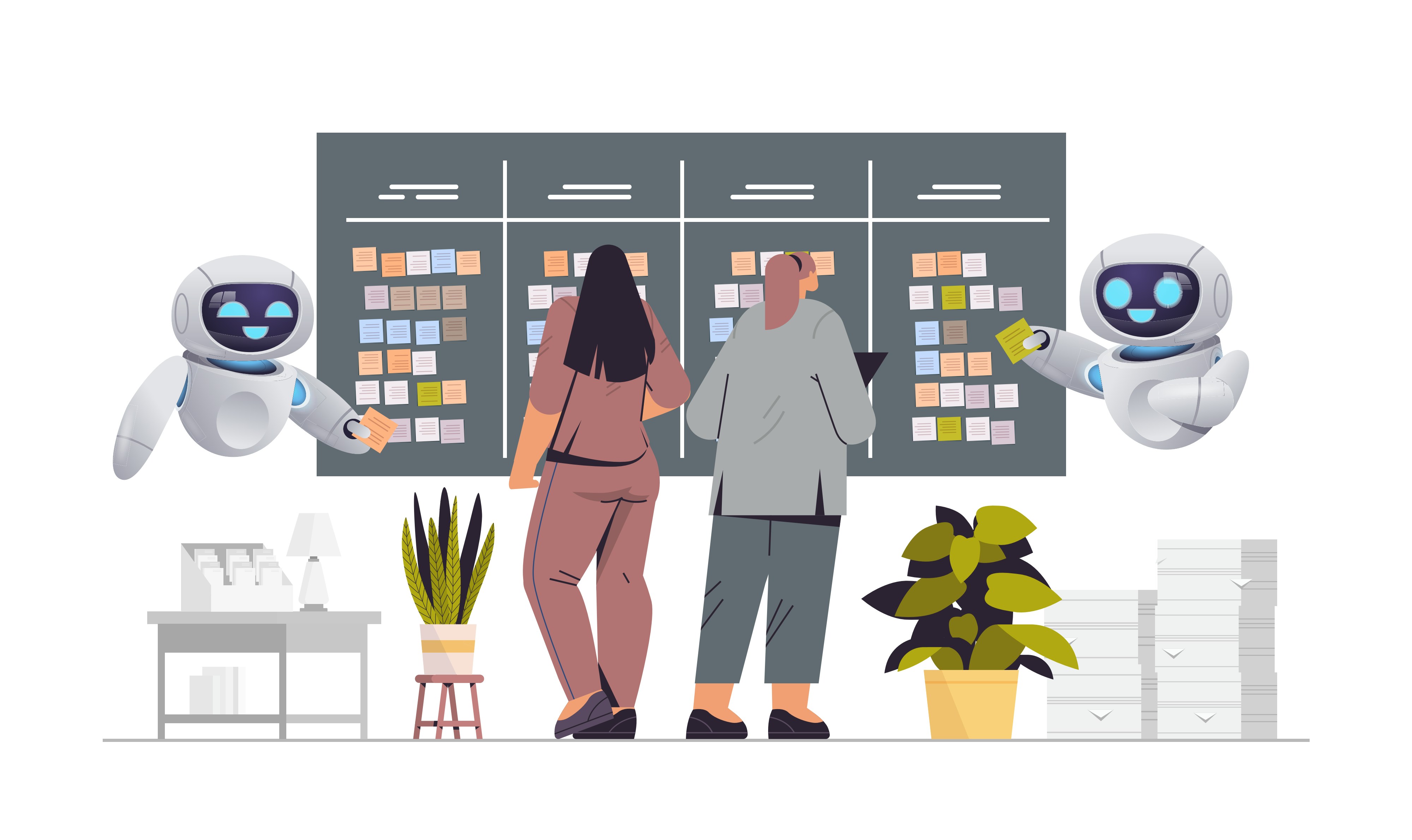
The role of the mid-level people manager has reached a critical breaking point. Over the past several years, corporate environments have aggressively pursued structural efficiency. Organizations have flattened hierarchies, widened spans of control, and removed operational coordination layers. While these transformations look optimized on an executive spreadsheet, they have concentrated a massive amount of friction onto the shoulders of front-line and mid-level managers.
In 2026, a manager is no longer just responsible for tracking output and guiding career development. They are expected to be hands-on individual contributors, amateur legal compliance experts, mental health and burnout sentinels, and administrative specialists for dozens of disparate software portals. At the same time, macro-economic conditions require teams to achieve higher performance milestones with static budgets.
Adding headcount to solve this bandwidth gap is no longer an option in the modern enterprise playbook. Instead, organizations must find a way to let their existing management tiers scale. They must enable them to manage larger teams and more complex workflows without increasing burnout or sacrificing organizational alignment.
The breakthrough of 2026 is that leading enterprises are no longer looking at Artificial Intelligence as an executive oversight tool or a pure engineering asset. Instead, they are positioning AI as an operational shield for people managers. By automating low-level conversational friction, administrative loops, and information gathering, enterprise AI is systematically giving managers their hours back, allowing them to do more with less by focusing on the deeply human aspects of leadership that technology can never replace.
To understand how AI transforms people management, we must first map the hidden operational taxes that quietly drain a manager's calendar. Most executives believe their managers are spending their days on strategic planning, process design, and direct coaching. However, time-tracking data tells a completely different story. The modern manager's day is fragmented by dozens of minor transactional disruptions.
The single largest daily interruption a manager faces is acting as a human directory for company information. Despite companies spending millions on centralized intranet sites, document repositories, and employee portals, the natural human behavior for an employee who needs an answer fast is to ask their direct manager.
Every day, managers are bombarded with questions like:
Each of these questions takes only a few minutes to answer, but the cumulative effect is devastating. Every question breaks a manager's deep-work focus, introducing context-switching penalties that stretch out project delivery timelines and drive cognitive exhaustion. It takes an average of 23 minutes to refocus after a single interruption, meaning a handful of basic policy questions can effectively destroy an entire afternoon of productive work.
The modern HR ecosystem relies heavily on self-service software systems. However, "self-service" often translates to "manager-mediated." When an employee needs to adjust their working hours, request an internal transfer, update their compliance certifications, or log a medical leave of absence, the manager is pulled in to initiate, verify, or approve the sequence.
Managers must log into separate, siloed platforms for payroll, benefits, learning management, and technical asset tracking. They spend hours cross-referencing corporate rulebooks to make sure their team's transactional requests align with shifting global and regional policies. This administrative overhead turns strategic people leaders into high-paid administrative clerks, forcing them to spend their time managing software queues rather than managing human performance.
In a distributed or hybrid work environment, visibility is highly fractured. Project updates, blocker notifications, and operational achievements are scattered across dozens of channels, from email threads and project boards to various chat applications.
To maintain an accurate understanding of team progress, a manager must engage in continuous "status chasing." They must manually ping team members for milestone updates, run custom queries across multiple developer or sales queues, and stitch together disparate data points into cohesive reports for leadership. This manual aggregation wastes critical hours that should be spent resolving actual strategic blockers or working directly with clients.
The traditional performance review cycle is universally dreaded by managers because of the extreme data-gathering burden it imposes. When evaluation cycles arrive, a manager must look back across months of work for multiple direct reports.
Because most organizations lack continuous, automated documentation, the manager must manually comb through legacy emails, past chat histories, and old project logs to piece together an objective performance narrative. This administrative burden often results in recency bias, where only the last few weeks of an employee's work are accurately evaluated, leading to team frustration, perceived unfairness, and skewed performance assessments that fail to reflect true value.
Enterprise AI platforms implemented in 2026 are not replacing managers; they are operating as highly competent, round-the-clock digital assistants. By sitting between the employee, the manager, and the organization's back-end data systems, AI restructures how information flows across the workplace.
The most immediate operational relief occurs when an enterprise deploys a conversational AI assistant directly inside the communication channels employees already use daily, such as Microsoft Teams or Slack.
When an employee has a question about a company policy or an IT issue, they no longer need to search through a confusing intranet site or message their manager. They simply type their question naturally into the chat assistant. The AI securely references the company’s unified knowledge base and returns a precise, verified answer in seconds.
Because the AI handles these routine requests instantly, up to 75% of routine inbound questions are completely deflected before they ever reach a manager's desk. The manager’s inbox stays clean, and their focus remains entirely uninterrupted, eliminating the micro-disruptions that erode daily efficiency.
In large teams, subtle shifts in employee engagement, sentiment, and output can easily slip past even the most attentive manager. Modern talent platforms leverage specialized machine learning models to analyze continuous workplace data, such as weekly micro-check-ins, pulse survey responses, and project completion velocities.
The AI does not spy on specific text conversations or violate employee privacy; instead, it aggregates behavioral patterns to flag potential risks early. For example, if an employee’s survey responses show a sudden drop in sentiment alongside a lengthening project delivery time, the AI flags this anomaly on the manager's dashboard. This proactive alert allows the manager to step in with support and career coaching long before the situation encounters a tipping point or results in an unexpected resignation.
AI transforms performance management from a stressful, backward-looking sprint into a smooth, continuous synthesis. Modern performance tools run quietly in the background throughout the year, logging completed milestones, collecting peer-to-peer feedback, and tracking self-evaluations.
When review season opens, the AI automatically organizes this data into a coherent, objective summary for each employee. The manager no longer has to spend hours hunting for data across old systems. Instead, they start the review process with a well-organized dashboard of facts, drastically reducing review preparation time while eliminating evaluation biases and saving weeks of emotional and operational stress.
Writing clear, constructive, and legally compliant feedback requires significant time and focus. Managers often struggle to articulate constructive criticism in a way that motivates an employee without causing defensiveness or disengagement.
Generative AI helps solve this writing bottleneck by acting as a collaborative editing partner. A manager can type raw, bulleted observations into a secure internal AI tool, such as "John hit all sales metrics but needs to communicate delays faster to the implementation team." The AI processes these notes and formats them into a professional, structured development framework. The manager maintains absolute control over the final message, reviewing, adjusting, and personalizing the text before sending it out, cutting administrative writing loops down to mere minutes.
The operational returns on enterprise AI investments are no longer based on speculative projections. Over twelve months of continuous enterprise data provide clear evidence: when organizations integrate AI assistants deeply into their workflows, managers consistently recover 2 to 4 hours of core focus time every single week.
To put this in perspective across an enterprise organization, the systemic impact scales rapidly. If an organization employs 100 managers, recovering an average of 3 hours per week results in 300 hours of restored leadership capacity every seven days. Over a standard operating year, that equals 15,000 hours of reclaimed professional output, the equivalent of adding 7.5 full-time strategic personnel without hiring a single person.
This unlocked capacity represents a massive efficiency gain for lean enterprises. The true strategic value, however, lies in how organizations choose to reallocate these recovered hours. Rather than using this extra time to simply pile more administrative tasks onto their teams, leading companies are deliberately directing these hours into high-value initiatives that move the needle on business performance:
To build an efficient, AI-assisted management layer, organizations must equip their leaders with a focused suite of practical tools. The following five enterprise platforms lead the market in execution and value:
MeBeBot One is the definitive frontline defense against the daily administrative disruptions that fracture a manager's schedule. Operating as an intelligent, conversational assistant embedded directly within Microsoft Teams or Slack, it provides an instant solution for employee questions regarding HR, IT, and facilities policies. Instead of routing basic questions to managers or helpdesk queues, MeBeBot One references an organization’s verified knowledge base to deliver immediate, accurate answers. It handles the volume of routine transactional interactions automatically, ensuring that managers enjoy uninterrupted focus time for critical business projects.
Lattice AI embeds artificial intelligence directly into the core performance and career development infrastructure of the organization. It functions as an on-demand leadership coach, guiding managers through complex appraisal cycles, automatically summarizing employee achievements across quarters, and suggesting contextual coaching strategies based on specific individual career paths. It removes the administrative friction from talent development, ensuring evaluations remain highly objective and data-driven.
15Five leverages machine learning to transform traditional employee engagement tracking. The platform automates weekly check-in sequences, sifts through qualitative sentiment inputs, and identifies emerging team alignment trends. It acts as an early-warning radar for people managers, highlighting subtle shifts in team morale, systemic operational roadblocks, or burnout trends well before they lead to employee turnover.
Microsoft Copilot functions as a ubiquitous administrative assistant across the entire productivity workspace. For people managers, its primary value lies in its ability to manage meeting overhead and unstructured communication data. Copilot records and synthesizes live meeting audio into structured summaries, itemizes explicit action points, and scans cluttered email inboxes to extract crucial project status updates, keeping managers aligned with minimal manual effort.
Workday AI brings sophisticated, high-level predictive analytics directly to the manager's desktop. It processes vast amounts of workforce data to help managers conduct advanced skills-gap analyses, optimize internal resource planning, and build accurate predictive talent models. It allows managers to make strategic, data-backed personnel decisions regarding retention, hiring, and internal promotions.
Even when a technology offers clear operational benefits, rolling it out to a stressed workforce requires careful change management. If managers view an AI tool as simply another platform they are forced to learn, adoption will stall. To ensure a successful rollout, organizations should follow this structured implementation framework:
When launching an enterprise AI platform, avoid abstract corporate messaging around "digital transformation," "technological optimization," or "future-proofing the business." Managers are focused on daily execution and are often exhausted by buzzwords.
Instead, center your launch communication entirely around the tangible friction they experience every day. Acknowledge their packed calendars and frame the new tool as a solution designed to protect their focus time. Use clear, empathetic positioning: "We know you are spending hours tracking down policy answers and handling routine ticket approvals. We are introducing this tool to handle that baseline paperwork for you, so you can focus on leading your team."
Do not speak about efficiency in vague percentages. Present the business case for AI using clear, undeniable math that connects directly to their work-life balance. Walk them through an explicit calculation of how much time they stand to win back:
"On average, every manager on our team receives 12 questions a week regarding basic HR policies, expense procedures, and software configurations. Finding and sending those links consumes roughly 3 hours of your time each week. By automating these responses through our chat channels, this tool returns those 3 hours directly to your calendar." When managers realize the technology translates to three fewer hours of evening administrative work, they will eagerly champion the platform.
Never roll out a new AI platform to your entire global management layer all at once. If any data inaccuracies or integration friction surface during a full-scale launch, critical users may lose trust and abandon the tool.
Instead, select a small, tech-forward group of managers to run a targeted 30-day pilot. This cohort should consist of leaders who actively look for process improvements and manage teams with high question volumes, such as sales operations, customer support, or high-volume engineering units. Use this initial group to test the system under real-world conditions, identify gaps in your documentation, and adjust the conversational tone of the assistant.
Once your pilot cohort completes its 30-day run, gather their performance data and qualitative feedback. Turn their experiences into brief internal case studies and share them openly with the rest of your management community.
Feature direct testimonials during leadership syncs or within internal newsletters: "During our month-long trial, the AI automatically resolved over 200 policy questions for engineering team members, deflecting 80% of routine helpdesk tickets and saving our engineering leads an average of 3.5 hours a week." When busy managers see their direct peers achieving real-time savings and focus relief, any initial skepticism will vanish, creating strong organic demand for the tool across the entire enterprise.
The organizations that thrive in the coming years will not be those that simply demand greater output from an overworked workforce. Success belongs to companies that intelligently eliminate operational friction, allowing their professionals to perform at their highest level.
Protecting manager capacity is no longer an optional wellness initiative; it is a core business requirement. When you give people managers back 2 to 4 hours every single week, you unlock the strategic capability of your entire company.
Managers can finally transition away from reactive crisis management and spend their time building high-performing, deeply engaged, and retention-resilient teams. The technology required to close this capacity gap is ready today. The choice is simple: continue losing valuable leadership hours to repetitive paperwork, or deploy the enterprise AI guardrails your managers need to lead effectively.
Stop letting routine administrative workflows and repetitive employee policy questions drain your leadership team's focus.
Discover how MeBeBot One integrates directly into Microsoft Teams and Slack to deliver an instant, highly accurate automated assistant that resolves HR, IT, and operational inquiries in under 30 days. Protect your managers' calendars, accelerate your team's support resolution times, and unlock true strategic capacity across your entire business. Schedule Your MeBeBot Demo.
.png)
.png)
.png)


.svg)


.svg)
.svg)